
From discovery to impact: how commercialization brings research to children and families
At Holland Bloorview, research doesn’t stop at discovery.
A new idea in a lab is just the beginning. The real goal is turning that idea into something practical a child and their family can benefit from, whether that’s a tool that helps them communicate, technology that makes therapy more engaging, or a solution that helps them participate in everyday life.
And that’s where commercialization comes in. Commercialization moves promising research beyond the lab and into the real world. It’s how discoveries become tools, technologies, apps, and programs that families and clinicians can access.
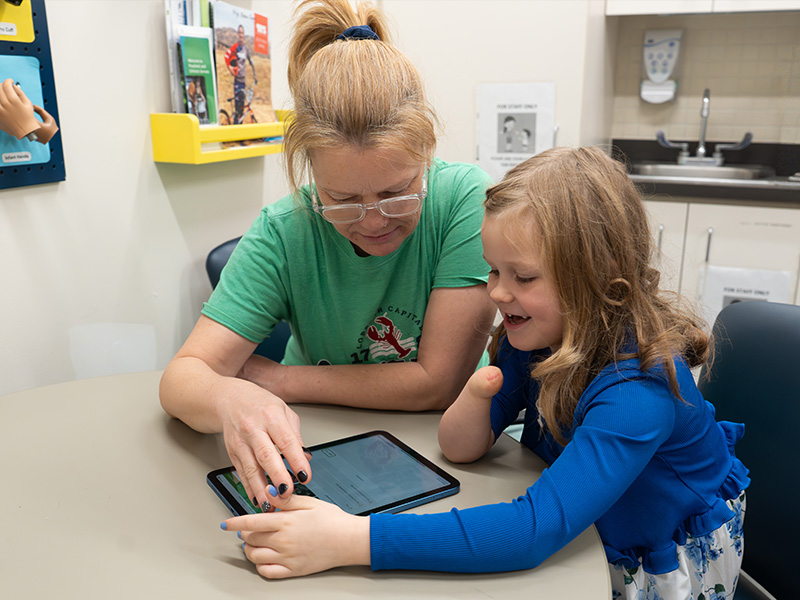
Thanks to a generous $150,000 gift over three years from EY Canada, more of those innovations will move closer to children and families who need them. The funding will support the commercialization team at the Bloorview Research Institute (BRI), helping more solutions reach families beyond the hospital’s walls.
“Shaping the future with confidence includes investing in ideas that have the potential to change lives. Holland Bloorview’s commercialization work helps ensure important innovation doesn’t stop at discovery, but is built, scaled and made accessible to children and families beyond the hospital. EY is proud to support an approach that pairs innovation with inclusion and long-term impact,” says Sonya Fraser, Chief Operating Officer at EY Canada — a longtime corporate supporter of Holland Bloorview.
“For families outside of Holland Bloorview, it’s all about access and reach,” says Sharon Wong, Director of Research Partnerships & Impact. “How do we create equal access to people of many different socioeconomic backgrounds, of different regions, of different cultures?”
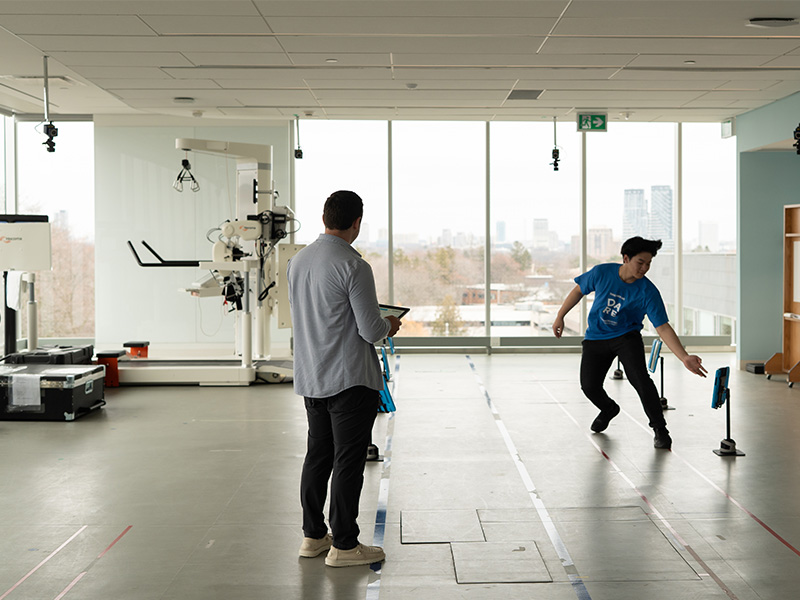
Across the BRI, researchers are exploring brain-computer interface (BCI) technology that could one day help children with complex physical disabilities communicate using brain signals. R2Play, a simulated sports environment, helps clinicians understand when young athletes are ready to safely play again after a concussion.
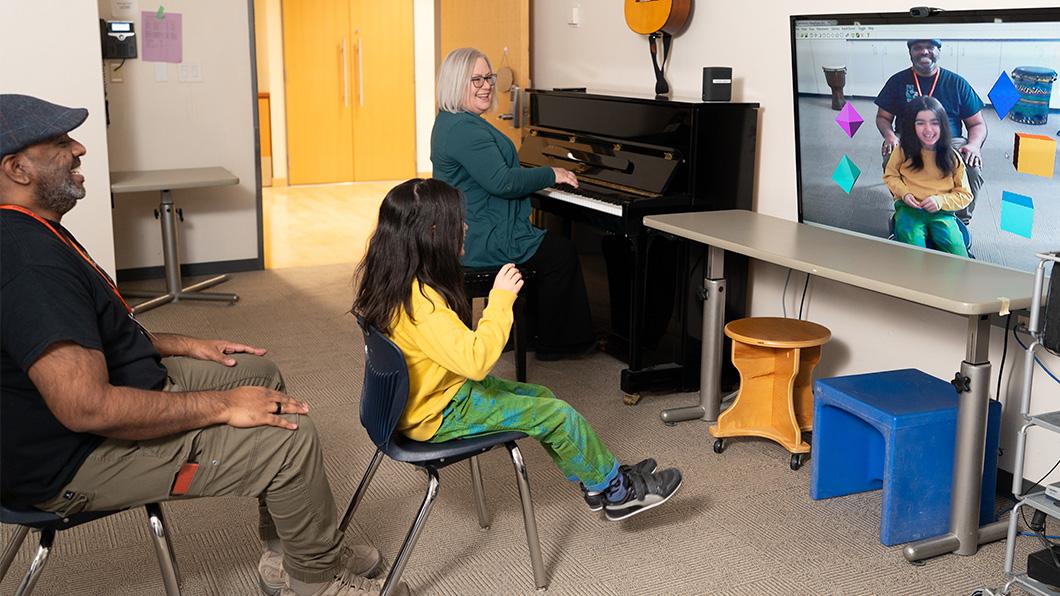
Other innovations focus on creativity, play and participation. Bootle Band is a music-learning video game that lets kids explore rhythm using instruments like maracas or tambourines. ScreenPlay transforms waiting areas into interactive play spaces where kids can move and trigger games projected on a large screen. And the Virtual Music Instrument (VMI) lets children with physical disabilities create music using small movements detected by a camera.
Behind every one of these ideas are families who help guide the work from the very beginning.
“Our families and clients are very involved at the BRI, they help co-create, participate and provide feedback,” Sharon says. “They’re brought on even from the grant proposal stage to see if this is an important research question that we should even be answering.”
Moving a promising idea from prototype to everyday use isn’t always easy. Sharon describes a stage researchers often face as the “valley of death,” where a project has proven potential but still needs support to become a fully developed product. And that’s where donor support truly matters.
“We're doing incredibly important work for often niche markets, like smaller and vulnerable populations, and we don't ever want to forget them,” Sharon says. With EY’s donation, the commercialization team can continue to help early discoveries take shape, supporting the work that helps ideas grow beyond the lab.
When that work and those ideas begin helping kids communicate, play, create or reconnect with the activities they love, that’s when the true impact of research is realized.