


For many families arriving to the Brain Injury Rehabilitation Team (BIRT) inpatient unit, the days and weeks after a sudden brain injury can feel overwhelming and uncertain – filled with countless questions about what comes next. In these moments, the role of a clinical neuropsychologist becomes a source of clarity and support. By helping clients and caregivers understand how an injury has affected thinking, learning, emotions and behaviour, neuropsychologists play a transformative role in shaping each child’s rehabilitation journey.
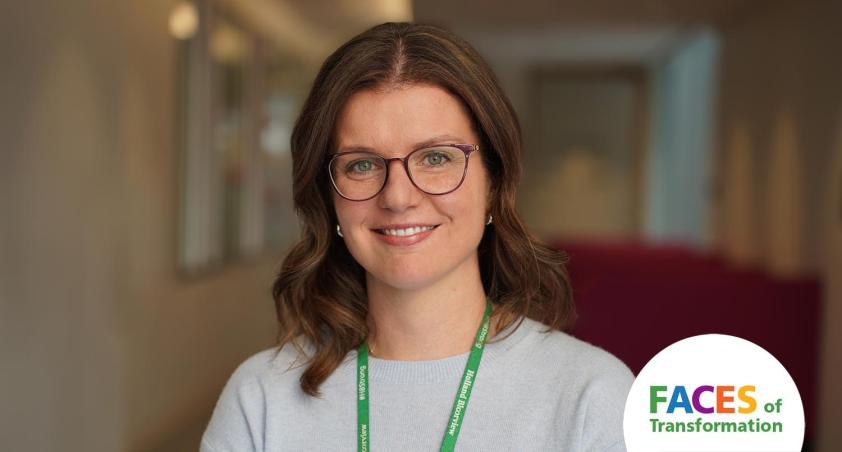
For nearly 13 years, Dr. Sara Stevens, clinical neuropsychologist on the BIRT inpatient unit, has been guiding clients and families through some of their most difficult transitions. Her work involves preparing for and administering neuropsychological assessment, creating customized recommendations and strategies that support the unique cognitive rehabilitation needs of each client, and providing education about brain injury, helping families plan for a safe and successful return to life in their community. Sara and her colleagues are also involved in training the next generation of highly skilled psychologists to ensure they are prepared to support the evolving and complex needs of clients and families.
In 2018, Sara co-developed the BIRT Caregiver Group, in collaboration with a fellow neuropsychologist, a family therapist and a family leader. The group creates a dedicated space where parents and caregivers connect, learn from one another and find solidarity in shared experiences. “Brain injuries are often unexpected, many people don’t know anyone else who has gone through this experience and families can feel alone. This motivated me to develop a group dedicated to caregivers and has been very well received!”
Read on to learn more about Sara’s journey at Holland Bloorview, the meaningful relationships that shape her work and the moments that continue to inspire her growth both professionally and personally.
What drew you to Holland Bloorview and how has your journey been like so far?
I was drawn to the inpatient programs and the focus on early stages of rehabilitation. There are very few programs like this, and being able to support a client’s cognitive rehabilitation and individualized care is very rewarding.
I have been fortunate to work on the BIRT inpatient unit. This team is highly committed to clients and families, and extremely knowledgeable and compassionate.
How do partnerships with other clinicians, teams, or programs influence and enhance your work?
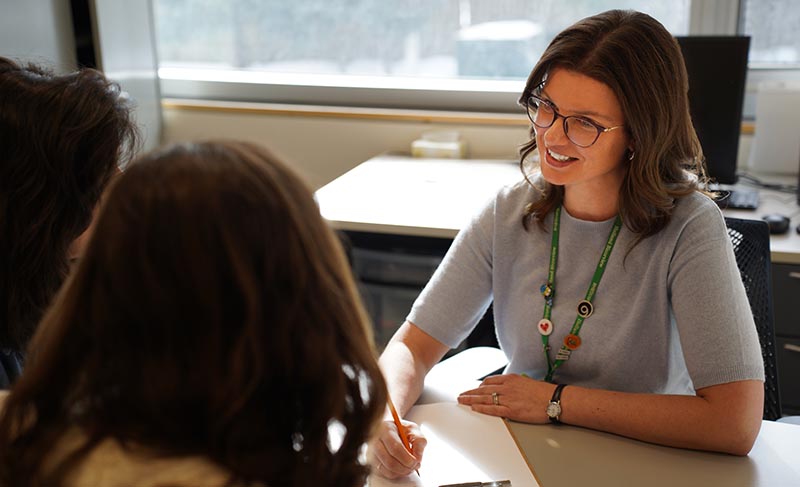
Working on an interdisciplinary clinical team is a vital part of my work. I often consult with my team members, including psychometrists, speech and language pathologists (SLPs), occupational therapists and social workers to best support the needs of our clients. Every clinician has a unique perspective, which I integrate into my assessment planning. For example, I may connect with a client’s SLP to learn about their communication goals and help inform the best timing to start a neuropsychological assessment.
What does a typical day look like for you in your current role?
People may be surprised by how much writing I do in my role. Neuropsychologists gather a lot of information to understand the impact of a brain injury. This includes understanding the client and their medical history, as well as their goals and what is important to them. I combine this with the results and observations from the neuropsychological assessment and interpret the information to create recommendations that are tailored to each client’s learning strengths and needs. All of this is then integrated in a detailed neuropsychological assessment report, which is ultimately a story about the client and how to best support them.
Why is this work so meaningful to clients and families?
There is a therapeutic component to helping clients understand their stories. Immediately following a brain injury, families and clients are often focused on taking it one day at a time. My work helps clients, and their families, understand the impact of their injury. I empower them to play an active role in their recovery, to advocate and give them hope that despite what has happened there is a bright future ahead.
How do you stay motivated and continue to grow in your profession?
Every client who I support is unique and their brain injury is unique. I am continually learning from each family and their experiences.
I engage in ongoing education opportunities, including attending workshops and learning from the expertise of my colleagues. Supervision and mentorship is another important focus within the psychology group. Through the internship and practicum programs, our group is highly dedicated to training the next generation of skilled psychologists.
Outside of work, what interests or passions do you enjoy that people might not know about you?
I enjoy going on adventures with my family, as well as going to concerts with friends and eating tasty food.