



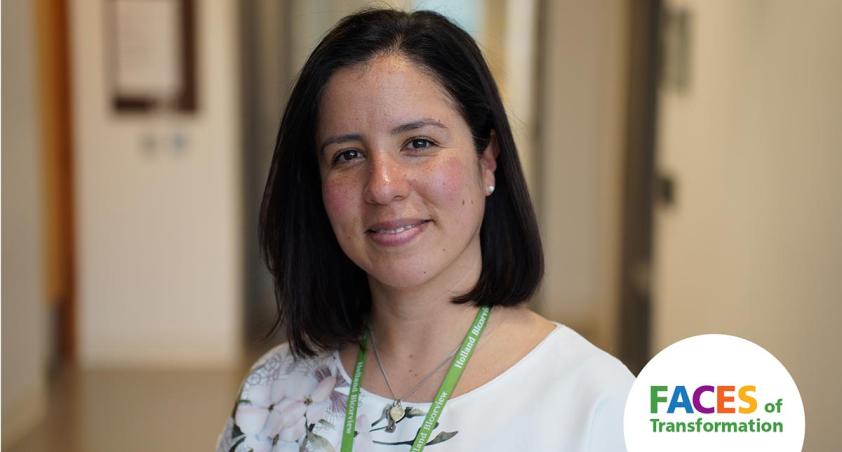
When families enter Holland Bloorview’s Extensive Needs Service, many are carrying years of complex emotions and experiences. As a family therapist, and often the first psychotherapist families encounter, Leticia Toro creates space for caregivers to pause, breathe and be heard.Drawing on her expertise as a registered behaviour analyst and registered psychotherapist, Leticia supports families as they process their journeys and navigate moments of uncertainty, growth and healing.
Leticia joined Holland Bloorview three years ago, inspired by the hospital’s reputation in research and diagnosis. Today, Leticia plays a vital role in helping parents and caregivers understand both their child’s therapeutic journey and their own emotional well-being. For Leticia, transformation begins when caregivers feel safe enough to explore and unpack their experiences.
“Family members and caregivers are the most important agents of change and support for our clients. I believe it is essential to include this perspective and approach to future models of care,” she says.
Read on to learn more about Leticia and her work.
What does a typical day look like for you?
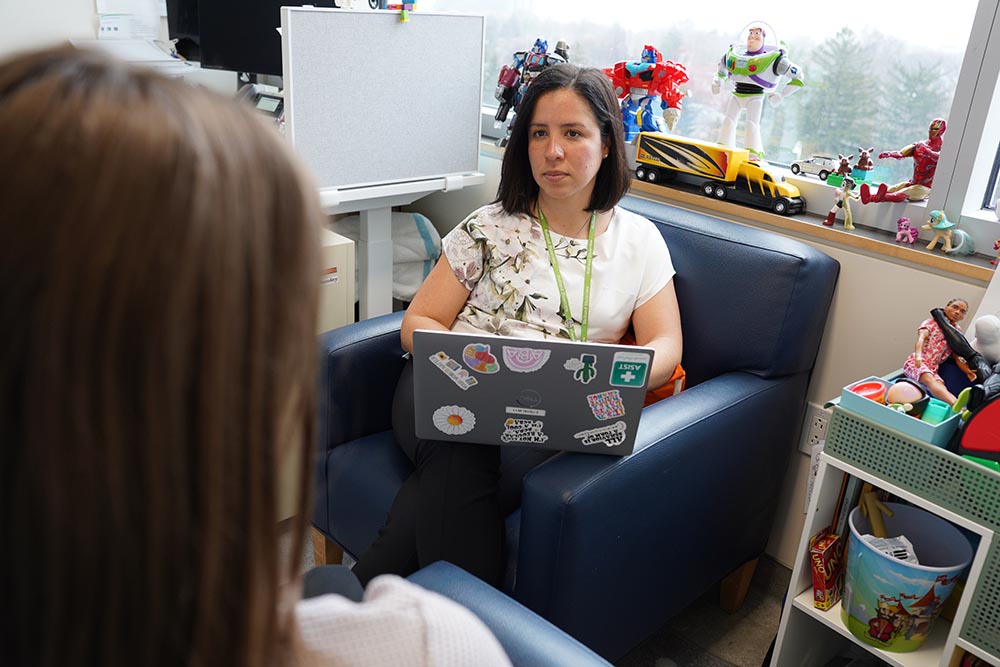
My days look different throughout the week. I have scheduled appointments with parents and caregivers, often while their child attends their appointment, helping families to use their time more effectively. I help keep things moving by supporting documentation and planning, joining team meetings and collaborating with other professionals on assessments. Team meetings matter to me because I bring important context about a client’s history and environment, helping support lasting progress in therapy. Debriefs with colleagues are equally key to providing effective wraparound care.
Additionally, I dedicate time to planning for parent groups, such as ACT for Caregivers and Growing While We Wait – both within the Extensive Needs Service.
Is there a moment in your practice where you witnessed meaningful transformation?
One moment that stands out involved a mother with intense feelings of guilt and shame related to her own experiences and reactions to the events taking place within her family. Using metaphors and psychoeducation helped her truly understand her reactions and experiences - a moment when everything clicked. She was able to engage in self-compassion. It was quite beautiful to witness healing in progress.
How has data or evidence informed your work?
Evidence-based practice is central to my work as a psychotherapist. I believe there is much work to be done to strengthen the evidence base available related to the community I serve. The Extensive Needs Service is structured to support clinician access to data, and ongoing efforts are focused on improving how that data is collected and used. Building stronger evidence related to the family therapy role within a wraparound pediatric care model would enhance trauma-informed practices and support more compassionate, developmentally responsive care.
What do you wish more people understood about psychotherapy?
People often expect therapy to give them the answers to all their problems. That’s not the case. Psychotherapy is a space to slow down, heal, process, reconnect and see more clearly. Life’s chaos can make us forget our own strength and wisdom. Therapy helps people rediscover that often with a guide who helps illuminate blind spots.
What keeps you motivated in such emotionally demanding work?
Witnessing vulnerability, courage and transformation inspire me. The entire process, both difficult and beautiful, is profoundly human. And I believe the world needs more humanity right now. More human, less machine!
What themes or concerns are top of mind for families right now?
Burnout is a major concern. Parents and caregivers often carry the full weight of their child’s care. Our team responds through advocacy, a bio‑psycho‑social approach, and the introduction of the family therapy role, which didn’t exist when I joined and was created because the need was identified and articulated.
If you could share one message with colleagues, what would it be?
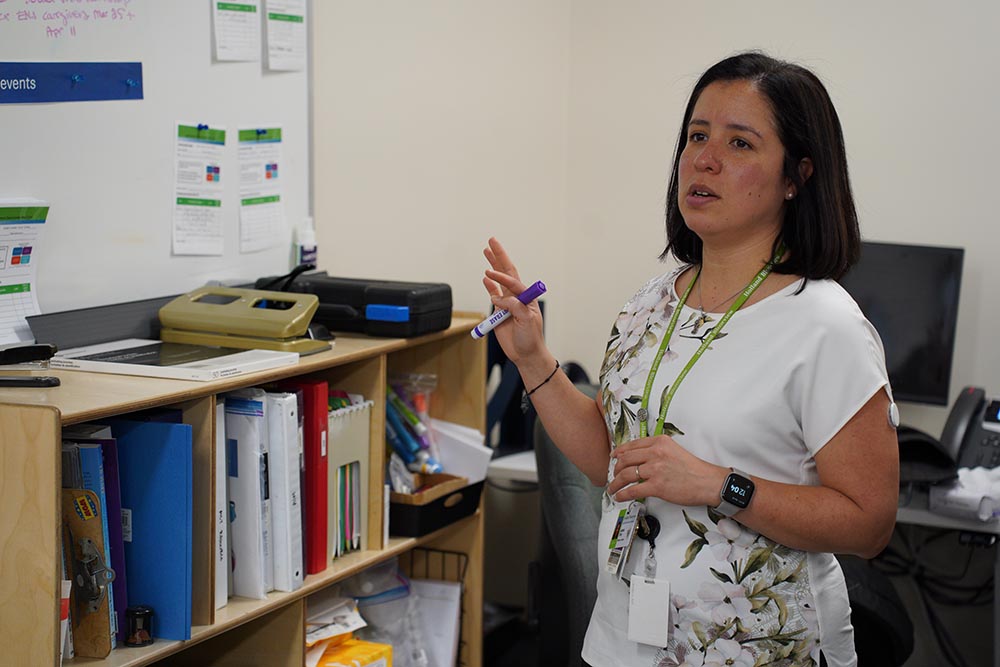
Make the time and space for families, especially parents and siblings. Don’t dismiss their input and experience and thoroughly include them in the planning and learning process.
Many colleagues already do this, and I encourage everyone to keep advocating for it, even when time and resources feel stretched. I truly believe that this practice will greatly enhance outcomes for everyone.
Outside of work, what interests or passions do you enjoy?
I love learning and am always curious. I have a 10‑month‑old German Shepherd, Lola, who keeps my husband and I busy. I also have a big family and nine nieces and nephews (ages seven and under). I love spending time with them whenever I can.