
The growing impact of family engagement in research
Fifteen years ago, when Gunjan Seth arrived in Canada with her family, including her son Ajay who has autism, she was navigating an unfamiliar system while desperately searching for the supports he needed to thrive.
Like many newcomer families, she was learning how to navigate an unfamiliar health care system while advocating for her child's needs. One of her family's earliest connections with Holland Bloorview was through a dental appointment. What began as a search for support eventually became something much deeper: a commitment to helping ensure that the experiences of children and youth with disabilities and their families help shape the future of research.

[Image caption: Gunjan with her husband and son]
Today, Gunjan is a family leader, research partner and co-chair of the Education and Training Working Group within the Research Family Engagement Committee (RFEC) at the Bloorview Research Institute (BRI). Her journey reflects the growing role that people with lived experience play in shaping research at Holland Bloorview.
"Over time, I realized that families hold valuable expertise through their lived experiences," says Gunjan. "What started as a search for support for my son gradually evolved into a passion for advocacy, partnership and system improvement."
Building stronger partnerships through RFEC
At BRI, family engagement in research is grounded in the belief that children, youth and families bring valuable lived experience that can strengthen research and make it more relevant to the communities it aims to serve.
The RFEC helps bring that belief to life. The committee creates opportunities for family leaders, youth and researchers and to work together to improve research processes, identify priorities, co-design studies, strengthen accessibility, share knowledge and foster meaningful partnerships across and beyond the research lifecycle.
"Research is strongest when it reflects the priorities, experiences and aspirations of the people it is intended to benefit," says Dr. Evdokia Anagnostou, vice-president of research and director of BRI. "Family leaders bring diverse and unique expertise that helps us ask good questions, design more meaningful studies and create research that is more relevant, inclusive and impactful. RFEC continues to play an important role in advancing a culture of meaningful partnership and co-creation at BRI, ensuring that families are actively involved in shaping the future of childhood disability research."
When Gunjan first became involved in research, she participated in surveys and engagement activities. Over time, her role expanded to reviewing grant applications, collaborating on research projects and contributing to initiatives that help shape family engagement practices across BRI.
Her involvement has continued to grow. She is now a co-applicant on the CIHR Partnering for Impact grant, "CANLINK: Partnering to Establish a National Pediatric Learning Health System Network to Advance Youth and Family Patient-Centered Measurement" led by Dr. Sarah Munce, senior scientist and associate chief of implementation science at BRI.
"When I first became involved, family engagement was still emerging as a recognized practice," says Gunjan. "Today, many researchers actively seek family input at various stages of the research process and increasingly recognize the value of lived-experience expertise."

[Image caption: Gunjan at the Bloorview Research Institute’s annual symposium]
Dr. Tim Ross, scientist at BRI and RFEC co-chair, has witnessed that evolution firsthand.
"Gunjan has been instrumental in helping strengthen family engagement within research at BRI," says Ross. "Through her leadership, insight and commitment to collaboration, she has helped move family engagement from consultation toward true partnership. Working alongside family leaders helps researchers better understand the lived experiences, priorities and aspirations of children, youth and families, leading to research that is more relevant, inclusive and impactful."
Turning ideas into action
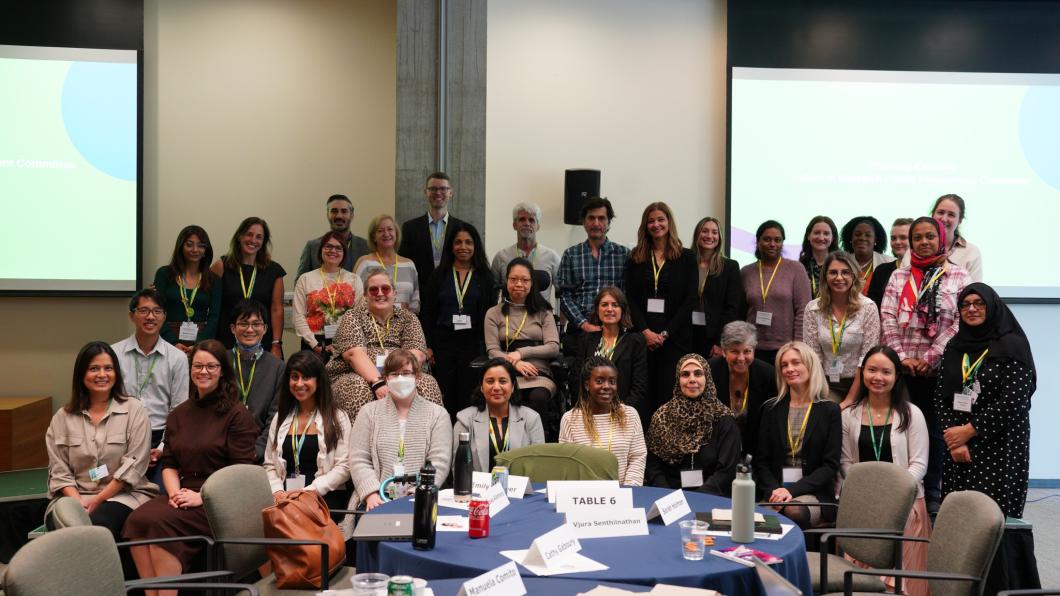
One of the most significant milestones in RFEC's recent evolution was a family engagement in research retreat held in 2024.
The event brought together family leaders, youth, researchers and partners from across Canada and internationally to identify priorities for the future of family engagement in research.
Gunjan worked alongside Dr. Munce to help co-facilitate discussions throughout the retreat.
The conversations extended far beyond the event itself.
Ideas generated during the retreat have informed recommendations and initiatives that are now undergoing implementation. Recommendations and initiatives are focused on education and training, wider outreach, recognition, communications and partnerships for family engagement. The retreat also informed the development of working groups designed to advance RFEC priorities and create more opportunities for family leadership and partnership.
One outcome was the creation of three working groups to advance priorities identified through the retreat. Gunjan co-chairs the Education and Training Working Group with Christine Provvidenza, lead, Evidence to Care, Teaching and Learning at Holland Bloorview, while family leaders Vance Tang and Emily Cooper co-lead the Real World Impact and Community and Reciprocity groups, respectively.
"Seeing ideas move from discussion to action was incredibly rewarding," says Gunjan. "It demonstrated what can happen when people come together as equal partners."
Another priority that emerged through RFEC discussions was the importance of recognizing lived experience as expertise. This has led to the development of a dedicated honoraria framework for members of the RFEC and RFEC-related working groups. Earlier this year, BRI implemented that framework, helping recognize the contributions of family partners and reduce barriers to participation.
For Gunjan, the change reflects a broader commitment to equity and inclusion in research.
"Honoraria help recognize that lived experience expertise is valuable and deserves to be respected alongside professional expertise," she says. "They help reduce barriers to participation and enable a more diverse group of families to contribute meaningfully."
Looking ahead
Gunjan hopes to see even more opportunities for youth, families and people with lived experience to influence research priorities, decision-making and leadership, while making engagement more accessible, inclusive and representative of the diverse communities BRI serves. She also hopes to see family and youth partnerships continue to deepen, creating even more opportunities for co-leadership and meaningful collaboration throughout the research process.
As the RFEC looks to the future, that commitment to partnership continues to guide its work—bringing researchers, youth and families together to create research with meaningful, real-world impacts.
By Priyanka Shah
Photos supplied.