
Holland Bloorview launches new integrated informatics platform
Every day at Holland Bloorview, thousands of moments of care unfold across clinical encounters. Each assessment, goal, outcome and client experience tells a story—not only about an individual client or family, but about how the system itself works. Increasingly, Holland Bloorview is designing its care, research and operations so those stories don’t end when an appointment does, but instead become the foundation for learning, improvement and change.
In 2023, Holland Bloorview formally embarked on its journey to become a Learning Health System (LHS) - a system grounded in continuous learning and improvement, where real‑world care generates data, data becomes knowledge, and knowledge is rapidly translated into practice. At the heart of this transformation is a clear ambition: to learn from every client experience to advance accessible, precise and equitable care for children and youth with disabilities.
 “A learning health system isn’t something that sits alongside care - it is care,” says Irene Andress, vice president, programs and services and chief nursing executive. “If we want to provide the best outcomes for children, youth and families, we have to understand what’s happening in real time, across programs, and across the client journey.”
Building our data infrastructure
Holland Bloorview recognized early on that becoming a learning health system would require us to build a data-rich learning environment - one that securely integrates clinical, operational, research and administrative data and makes it usable and accessible across the organization.
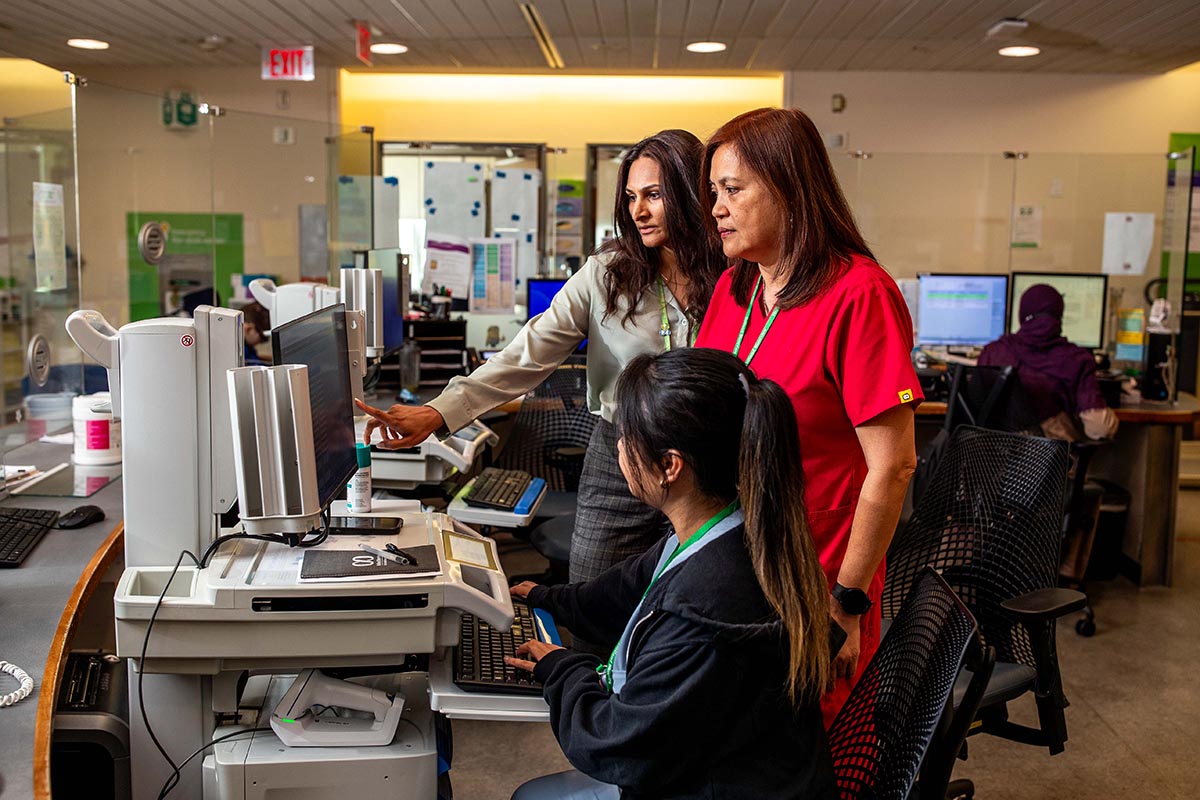
Therefore, over the last year, our Decision Support and Data Analytics, Research and Strategy teams came together to design and build a robust integrated informatics platform, which serves as the backbone of our learning health system. The platform enables enterprise‑wide data collection, linkage and exchange, connecting information from the electronic medical record with administrative, quality improvement and research data in a secure and compliant way.
 “We’re ensuring the power of data is accessible to the experts-staff, clinicians, researchers and clients and families -turning everyday questions into clear, actionable answers.,” explains Enza Dininio, vice president, corporate performance, digital transformation and CFO. “When clinicians, leaders and researchers can ask questions of data that reflects the care we provide and the clients and families we serve, decisions become faster, more informed and more equitable.”
Learning from every client experience
Innovation in pediatric developmental health care – especially pediatric disability care – has lagged for decades. One factor is due to limited access to real-world datasets that enable ground-breaking advances in care. Our new informatics platform enables integration of information on diagnoses, demographics, social needs, health equity indicators, outcomes and client experience across programs and services. Data, that up until now, were challenging, if not impossible, to systematically access and utilize.
This platform makes it possible to see both the micro and macro‑level trends shaping services system‑wide. It enables teams to identify patterns, gaps and opportunities—such as emerging needs across populations, inequities in access or outcomes, and opportunities to redesign care pathways.
 “What’s powerful about our LHS approach that research, care and improvement are no longer separate. We’re learning directly from clinical practice and feeding that knowledge back into care much more quickly.” says Azadeh Kushki, senior scientist and associate chief of data at the Bloorview Research Institute.
The platform also supports secure linkage with external health administrative data, enabling deeper understanding of how children with disabilities interact with the broader health and social systems-information that is critical for planning, advocacy and system‑level change.
In 2025/26, the Neuromotor team used linked operational and clinical data to build a clearer, shared view of the evolving population they serve. This work is helping the team better quantify need, identify where pathways can be strengthened, and begin redesigning care pathways to improve outcomes for children and youth. On the Specialized Orthopedics Developmental Rehabilitation (SODR) unit, another team is examining how diagnosis -alongside medical and social factors—influences length of stay. Their goal is to enable more precise treatment plans and more proactive discharge and admission planning, improving outcomes and client experience while strengthening access to hospital and community care.
Why it matters?
Children and youth with disabilities represent a significant and diverse population, yet their experiences are often underrepresented in health data and system planning. By building a learning health system centered on comprehensive, high‑quality data, Holland Bloorview is advancing more precise, equitable and responsive care, and contributing knowledge that can inform practice well beyond its walls.
 “Data alone doesn’t create change - people do,” says Laura Bowman, project manager, research and evaluation. “A learning health system works when staff at every level see how the data reflects their practice, their clients and their impact, and when they’re supported to use it to improve care.”
As the organization continues its journey, the goal remains clear: to ensure that every interaction with a child or family strengthens not only their individual care, but also the system’s ability to learn, adapt and do better - today and in the future.
By Nadia Lise Tanel