
Holland Bloorview is partnering across the health-care system to make the transition from pediatric to adult care safer and more coordinated - reducing missed care, worsening outcomes, emergency department use, and isolation. On March 30, 2026, we co-led a first-of-its-kind medical transitions think tank to design pathways with earlier planning, navigation support, better information-sharing and multidisciplinary adult models.
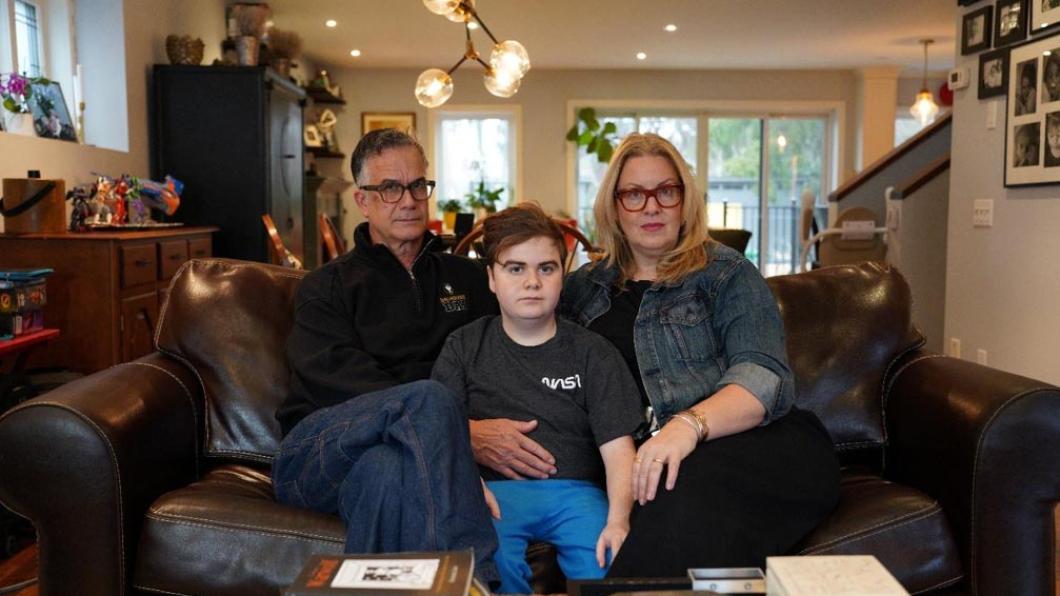
(Photo: Emery Gelissen, pictured with parents Kadey Schultz and Marcus Gelissen, is a 19 year old with Duchenne muscular dystrophy who has recently aged out of pediatric health care.)
For young people with disabilities and complex medical needs, the transition from pediatric to adult health care remains one of the most vulnerable points in their care journey. While pediatric systems are typically coordinated, team based, and developmentally informed, adult care is often fragmented and difficult to navigate. Young adults may suddenly be responsible for coordinating care across numerous specialists, frequently without a primary care provider, consistent information sharing, or a clearly identified clinical lead.
For families like Kadey Schultz and Marcus Gelissen, they describe this moment as a “transition cliff,” one that can result in missed care, worsening health outcomes, increased emergency department use, and isolation.
“The transition to adult care has been short on care,” says Schultz, parent to Emery, a young adult with Duchenne muscular dystrophy. “It is irresponsible to leave young adults and their families to navigate this highly complex, overwhelming and at times medically risky transition, on our own. Poor transitions cause poor outcomes. We have worked so hard to support these kids live to be adults. The work can’t stop at 18; now is the time when we have to work better and smarter, together.”
These challenges are not new, but they are becoming more urgent. More youth with childhood onset conditions are reaching adulthood, yet adult care systems have not been designed or resourced to meet their needs in a coordinated, longitudinal way. Preparation alone is not enough; without aligned adult services, clear accountability, and system level coordination, transitions remain risky and inequitable.
Supporting transitions
Holland Bloorview Kids Rehabilitation Hospital is partnering with the adult care providers, advocacy groups and youth and young adults to close this gap. Through long standing transition programs and partnerships, and by advancing models that span pediatric and adult care, Holland Bloorview is helping reshape how transitions are approached across the health system.
On March 30, Holland Bloorview co led a first of its kind medical transitions think tank with adult health, community, research, advocacy, primary care, government and lived experience partners. The think tank brought stakeholders together to co design a more integrated, multi year transition pathway for youth with muscular dystrophy - one that treats transition as a process, not a single handoff.
The outcome was a shared vision for coordinated care across the lifespan, including earlier planning, stronger pediatric adult partnerships, dedicated transition navigation, improved information sharing, and the development of centralized, multidisciplinary adult care models.
This work reflects Holland Bloorview’s broader commitment: not just to support individual clients, but to lead system change so no young person is left to navigate the transition to adulthood alone.
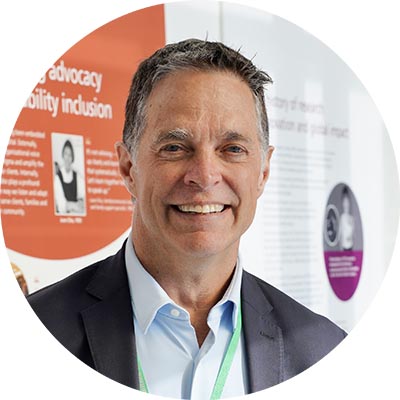 “By working in partnership with adult care, advocacy organizations, and young people themselves, we will close the long-standing gap between pediatric and adult care,” says Bruce Squires, president and CEO. “Together, we will build capacity across the system and develop strong transition pathways and programs to ensure young people and families are supported every step of their journey into adulthood and beyond.”
Read more about how we are addressing the gap in the transition from pediatric to adult health care.
By Nadia Lise Tanel