


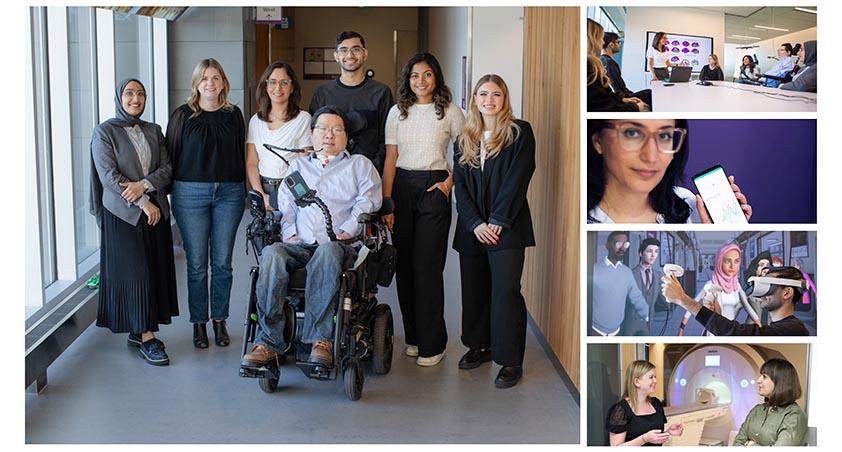
Welcome to the Neurodiversity and Personalized Health Lab
- Dr. Azadeh Kushki has been promoted to professor at the University of Toronto's Institute of Biomedical Engineering
- Dr. Azadeh Kushki named Canada Research Chair in Neurodiversity and Personalized Health
- Dr. Azadeh Kushki named Associate Chief of Data Science
- Check out our newest publications!
- E. Wan*, M. Penner, J. Crosbie, J. Brian, E. Kelley...A. Kushki. (2026). Transdiagnostic Behavioral and Sociodemographic Influences on the Cognitive-Adaptive Functioning Gap in Neurodivergent Children. Scientific Reports.
- M. Kolisnyk, K. Lyons, E. J. Choi, M. Vandewouw...A. Kushki et al. (2026). Decoding the neural basis of sensory phenotypes in autism.Biol Psychiatry Cogn Neurosci Neuroimaging.
- A. Lautarescu, B. Trost, A. Kushki et al. (2026). Autism data sharing: Benefits, challenges, and recommendations.PLOS Digital Health.
- L. B. Norbom, B. Syed, R. Kjelkenes, J. Rokicki, A. Beauchamp, S. Nerland, A. Kushki et al. (2025). Probing Autism and ADHD subtypes using cortical signatures of the T1w/T2w-ratio and morphometry.NeuroImage: Clinical.
- Y. Sadat-Nejad, M. Vandewouw, J. Brian, J. Crosbie, R. J. Schachar...A. Kushki. (2025). Characterizing Replicability in the Clustering Structure of Brain Morphology in autism, attention-deficit/hyperactivity disorder, and obsessive compulsive disorder.Translational Psychiatry.
- S. H. Tonekaboni, A. Laboni, B. Trost, M. Reuter..A. Kushki et al. (2025). Comparative Analysis of Phenotypic and Genotypic Differences Between Individuals Affected by Regressive and Non-Regressive Autism: A Cross-Sectional Study.Autism Research.
- S. Alatrash*, T. Paul, B. F. Andrade, S. Monga, J. Brian... A. Kushki. (2025). Irritability in autism examined through network analysis of phenotypic and physiological correlates.Scientific Reports.
- L. Sung, M. Brudno, M. C. W. Caesar, A. A. Verma, ...A.Kushki et al. (2025). Approaches to identify scenarios for data science implementations within healthcare settings: recommendations based on experiences at multiple academic institutions. Frontiers in Digital Health.
- E. Wan et al., 2025; Exploring Phenotypic and Sociodemographic Influences on Cognitive-Adaptive Functioning Gap in Neurodivergent Children (Preprint)
- L. B. Norbom et al., 2025; Probing Autism and ADHD subtypes using cortical signatures of the T1w/T2w-ratio and morphometry
Research Focus:
Dr. Azadeh Kushki is the Canada Research Chair in Neurodiversity and Personalized Health, Associate Chief of Data Science at the Bloorview Research Institute, and Senior Scientist at the Holland Bloorview Kids Rehabilitation Hospital. She is also a Professor at the Institute of Biomedical Engineering at the University of Toronto. Dr Kushki’s research focuses on the application of data science approaches to characterize neurodevelopmental diversity, and to advance personalized supports for neurodivergent children.
Characterizing Autism
Meet the staff and students
Scientist
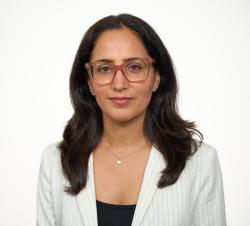
Dr. Azadeh Kushki
Links:
- Please click here to learn more about Dr. Azadeh Kushki's education background and more.
- Azadeh Kushki, Professor, University of Toronto - Institute of Biomedical Engineering Faculty
Research Staff
- Tithi Paul, Research Manager
- Kamran Niroomand, Research Engineer
- Reema Gandhi, Research Assistant
- Ghazal Rafeeh, Research Assistant
- Karen Zhang, Research Data Analyst
- Aleena Walji, Project Manager
Current Trainees
- Karly Franz, Postdoctoral Fellow
- Mahsa Bagheri, Postdoctoral Fellow
- Pourya Moghadam, Postdoctoral Fellow
- Eric Wan, PhD Candidate
- Sara Alatrash, PhD Candidate
- Zeeshan Siddiqui, MASc Candidate
Below are some of our publications.
Find more of our published work with Dr. Kushki on Google Scholar.
* denotes trainees.
- E. Wan*, M. Penner, J. Crosbie, J. Brian, E. Kelley...A. Kushki. (2026). Transdiagnostic Behavioral and Sociodemographic Influences on the Cognitive-Adaptive Functioning Gap in Neurodivergent Children. Scientific Reports.
- M. Kolisnyk, K. Lyons, E. J. Choi, M. Vandewouw...A. Kushki et al. (2026). Decoding the neural basis of sensory phenotypes in autism.Biol Psychiatry Cogn Neurosci Neuroimaging.
- A. Lautarescu, B. Trost, A. Kushki et al. (2026). Autism data sharing: Benefits, challenges, and recommendations.PLOS Digital Health.
- L. B. Norbom, B. Syed, R. Kjelkenes, J. Rokicki, A. Beauchamp, S. Nerland, A. Kushki et al. (2025). Probing Autism and ADHD subtypes using cortical signatures of the T1w/T2w-ratio and morphometry.NeuroImage: Clinical.
- Y. Sadat-Nejad, M. Vandewouw, J. Brian, J. Crosbie, R. J. Schachar...A. Kushki. (2025). Characterizing Replicability in the Clustering Structure of Brain Morphology in autism, attention-deficit/hyperactivity disorder, and obsessive compulsive disorder.Translational Psychiatry.
- S. H. Tonekaboni, A. Laboni, B. Trost, M. Reuter..A. Kushki et al. (2025). Comparative Analysis of Phenotypic and Genotypic Differences Between Individuals Affected by Regressive and Non-Regressive Autism: A Cross-Sectional Study.Autism Research.
- S. Alatrash*, T. Paul, B. F. Andrade, S. Monga, J. Brian... A. Kushki. (2025). Irritability in autism examined through network analysis of phenotypic and physiological correlates.Scientific Reports.
- L. Sung, M. Brudno, M. C. W. Caesar, A. A. Verma, ...A.Kushki et al. (2025). Approaches to identify scenarios for data science implementations within healthcare settings: recommendations based on experiences at multiple academic institutions. Frontiers in Digital Health.
- E. Wan*, J. P. Lerch, E. Anagnostou, M. Penner, ... A. Kushki. (2025). Exploring Phenotypic and Sociodemographic Influences on Cognitive-Adaptive Functioning Gap in Neurodivergent Children. Molecular Autism (Preprint)
- C. Smith*, A. Lautarescu, T. Charman, J. Crosbie, ... A. Kushki. (2024). Harmonizing two measures of adaptive functioning using computational approaches: prediction of vineland adaptive behavior scales II (VABS-II) from the adaptive behavior assessment system II (ABAS-II) scores. Molecular Autism.
- M. Vandewouw*, Y. Ye*, J. Crosbie, R. J. Schachar, A. Iaboni, ... A. Kushki. (2024). Dataset factors associated with age-related changes in brain structure and function in neurodevelopmental conditions. Human Brain Mapping.
- M. Vandewouw*, A. Norris-Brilliant, A. Rahman, S. Assimopoulos, S. U. Morton, A. Kushki et al. (2024). Identifying novel data-driven subgroups in congenital heart disease using multi-modal measures of brain structure. NeuroImage.
- F. Kurth et al, D. Schijven, O. A. van den Heuvel , M. Hoogman, D. van Rooij, D. J. Stein, J. K. Buitelaar, S. Bölte, G. Auzias, A. Kushki et al. (2024). Large-scale analysis of structural brain asymmetries during neurodevelopment: Associations with age and sex in 4265 children and adolescents. Human Brain Mapping.
- P. Ahmadian*, R. E. Cardy*, A. Kuhski. (2024). Usability of an Augmented Reality Bedtime Routine Application for Children with Autism Spectrum Disorder. Assistive Technology.
- F. Morgado, M. Vandewouw*, C. Hammill, E. Kelley, J. Crosbie, R. Schachar, M. Ayub, R. Nicolson, S. Georgiades, P. Arnold, A. Iaboni, A. Kushki, M. Taylor, E. Anagnostou, and J. Lerch. (2024). Behaviour-Correlated Profiles of Cerebellar-Cerebral Functional Connectivity Observed in Independent Neurodevelopmental Disorder Cohorts. Translational Psychiatry.
- M. Mahjoob*, R. E. Cardy*, M. Penner, E. Anagnostou, B.F. Andrade, J. Crosbie, E. Kelley, M. Ayub,
J. Brian, A. Iaboni, R. Schachar, S. Georgiades, R. Nicolson, J. Jones, A. Kushki. (2024). Predictors of Health-Related Quality of Life for Children with Neurodevelopmental Conditions. Scientific Reports. - M. Mahjoob*, T. Paul*, J. Carbone*, H. Bokadia*, R. E. Cardy*, S. Kassam*, E. Anagnostou, B. Andrade, M. Penner, and A. Kushki. (2024). Predictors of Health-Related Quality of Life in Neurodivergent Children: A Systematic Review.Clinical Child and Family Psychology Review.
Welcome to holly™
holly™ is a mobile application that uses heart rate data to provide insights into a user’s level of emotional arousal. By increasing awareness of physiological and emotional states, holly™ can support self-awareness and wellness. holly™ is not intended to be used as a diagnostic tool or to guide clinical interventions or decision-making.
holly™ combines information from wearable devices, including heart rate data, with other relevant information to estimate emotional arousal levels in near real time. The app then presents this information through simple visual displays that can be accessed by the user and/or caregiver.
By making emotional and physiological information easier to understand, holly™ helps individuals of all ages build self-awareness and support their well-being.