

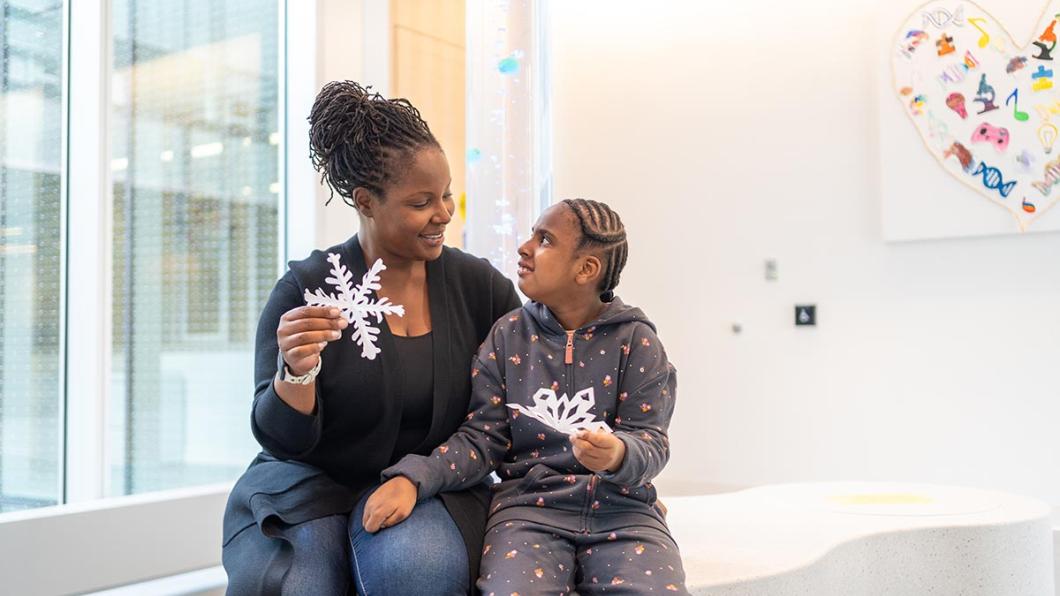
Developmental pediatrician Dr. Rageen Rajendram shares five tips on making this holiday season more sensory friendly
With the holiday season in full swing, there can be lots of excitement and merrymaking for families. But the break from routines along with heightened expectations to honor cherished family traditions may overwhelm some children and youth with disabilities and neurodevelopmental differences.
As a developmental pediatrician at Holland Bloorview Kids Rehabilitation Hospital, Dr. Rageen Rajendram knows this first-hand. He provides care for children and youth with autism and also has a sibling who has been diagnosed with ASD. Dr. Rajendram shares these five tips on how families can create a sensory-friendly and inclusive holiday experience for neurodiverse children and youth.
1. Build a predictable holiday plan together
Many neurodivergent kids cope better when they know what’s coming. Preview the day with a simple schedule, visual calendar, or social story (“First we open stockings, then Grandma comes, then we watch a movie”). Knowing the sequence – and where the breaks are – can lower anxiety and reduce behaviour challenges.
2. Create a “sensory safe space”
Identify a quiet, cozy place your child can retreat to if things feel like “too much” – a bedroom, a corner with pillows, noise-cancelling headphones, favourite toys or fidgets. Let your child know in advance that it’s okay to take breaks there anytime. A predictable escape option can prevent meltdowns before they start.
3. Match the environment to your child’s sensory profile
Holiday environments can be intense in both good and hard ways. Some kids love twinkling lights, music, and busy rooms; others find those same things overwhelming. Notice what your child seeks out and what they avoid, and adjust where you can – for example, turning music down, dimming lights, offering quieter spaces, or intentionally building in sensory experiences they enjoy (like movement breaks, deep pressure, or favourite fidgets). The goal isn’t to remove all sensory input, but to balance it in a way that feels comfortable for your child.
4. Protect key routines (and be flexible with the rest)
Sleep, meals, medications, and regulation strategies are often the “anchors” of a child’s day. Try to keep these as consistent as possible, even if other holiday traditions look different. It’s okay to shorten visits, arrive late, or leave early if that helps your child stay regulated and enjoy the parts that matter most.
5. Offer choices and a clear exit plan
Many neurodivergent children feel more in control when they have real choices: which relative to sit beside, whether to join the group game or do a quieter activity, whether to say hello with a wave instead of a hug. Before events, agree on a simple signal they can use to tell you they need a break or to go home. This honours their autonomy and reduces the pressure they feel in social situations.
By Suelan Toye