

My daughters, KPop Demon Hunters, and radical acceptance
By Anchel Krishna
Like the parents of most eight-year-olds, our movie nights have been dominated by KPop Demon Hunters. I was expecting the film to be just another kids' movie. Instead, it was a movie that got my daughter Nal and I thinking about identity, belonging and the beauty in embracing your full self. Also, I didn't expect to find myself singing along to the movie's songs at full volume while driving alone (if you pull up beside me at a red light, please don't judge me!).
KPop Demon Hunters is an animated film about a girl group who are global music stars and secret demon hunters. It follows Rumi, the group’s leader, who hides that she is half demon from her two closest friends and the public, while trying to maintain a perfect image. When her secret begins to surface, she must choose between continuing to live a lie or fully accepting who she is. The film explores identity, friendship and the idea that our differences can be sources of strength rather than weaknesses.
That message hit close to home as a parent who spends so much time navigating two worlds. There is the world where the messy, jagged edges of disability shape our experience. And it’s hard. Sometimes it feels easier to only show the smooth edges of our life to people who don't live in the disability world, to only reveal the parts that they can easily understand.
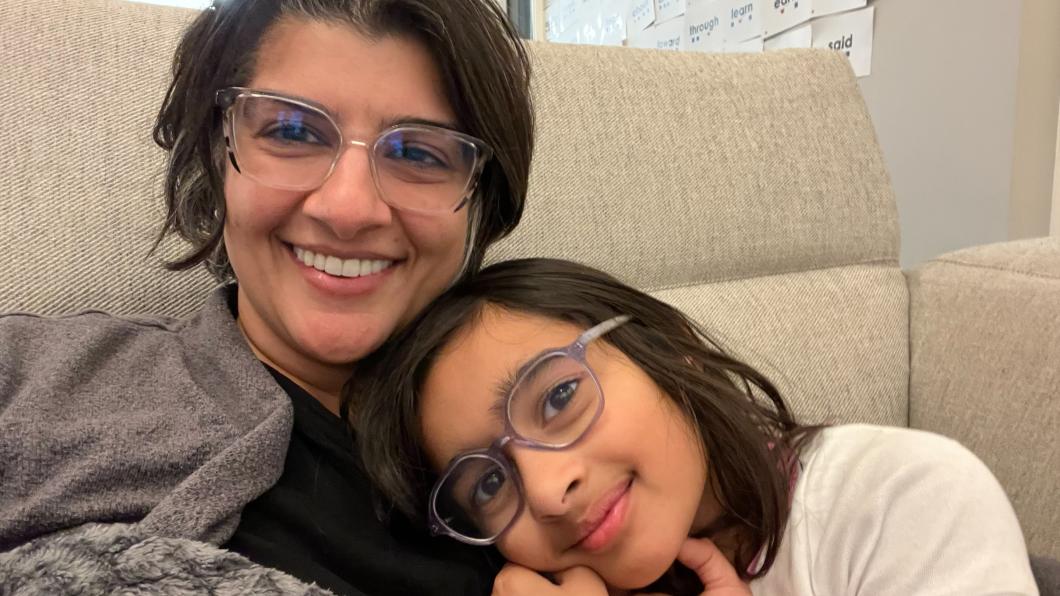
When I was watching the movie and feeling all of my feels, I looked over at Nal. She was as engrossed as I was, and I wondered if this had her thinking along the same lines. She navigates a complex world as a sibling of a sister with a disability. She has many close friends who truly accept and embrace her sister Syona, alongside Nal. But Nal has often expressed how she feels alone in her experience, too, saying: “I have a sister, like other kids, but my sister is not like other sisters.” It’s a simple way to explain her life, but poignantly accurate.
Everything shifts near the end of the film when Rumi can’t keep hiding part of herself. And that is where my favourite song comes in. What It Sounds Like manages to be a banger with lyrics that made me feel seen:
Nothing but the truth now
Nothing but the proof of what I am…
We broke into a million pieces, and we can't go back
But now I'm seeing all the beauty in the broken glass
The scars are part of me, darkness and harmony
My voice without the lies, this is what it sounds like…
This life we’ve built raising one daughter with disabilities and one without has to be based on truth. The proof of our challenges is very visible and real, and yet in it we have found strength and purpose.
The song ends with this:
Fearless and undefined, this is what it sounds like
Truth after all this time, our voices all combined
When darkness meets the light, this is what it sounds like
This life that we’ve built has space for Nal to acknowledge and voice her experience as a sibling in a safe and supportive space. Together we share our experiences, and that brings them to the surface for all of us. We all experience post-traumatic growth together, finding meaning and strength through our challenges.
At the end of the movie we danced, I cried, and we talked about the lessons we were taking away: about radical acceptance of exactly who you are in that moment, and leaning on those who love you most.
We also talked about how much we wished the film had included more explicit representation of characters with disabilities. While many people online have suggested that Zoey, one of the members of the trio, may be autistic or have ADHD, it would have been so powerful to see that woven into the story in an intentional and authentic way.
My daughter Syona doesn’t watch TV or movies because of her visual processing disorder, which makes representation even more complicated in our house. But visible inclusion for kids who move through the world with different needs, strengths and disabilities matters deeply. Showing how they add value exactly as they are helps everyone understand that people with disabilities are not on the margins or an afterthought. They are woven into our day-to-day experiences and pop-culture references. Syona deserves to see characters like herself in mainstream stories like this, and Nal deserves to see characters like her sister. There is space for everyone in these stories.
That longing for representation is really about connection. This film reminded me that healing and growth happen when we stop hiding parts of ourselves and let others in. It is not always comfortable, but it is how we raise kids who understand that every person carries their own "darkness and harmony," and that all of those patterns belong.
For anyone parenting a child with a disability, or those learning to accept parts of themselves they have kept tucked away, I hope you remember this: You do not need to seal anything off to belong. You deserve to show your full self. Those who see your value will be the ones you want surrounding you. When you reveal who you truly are, your voice might become stronger. It might even sound exactly the way it was always meant to.
Like this content? Sign up for our monthly BLOOM e-letter, follow BLOOM editor @LouiseKinross on X, or watch our A Family Like Mine video series.