


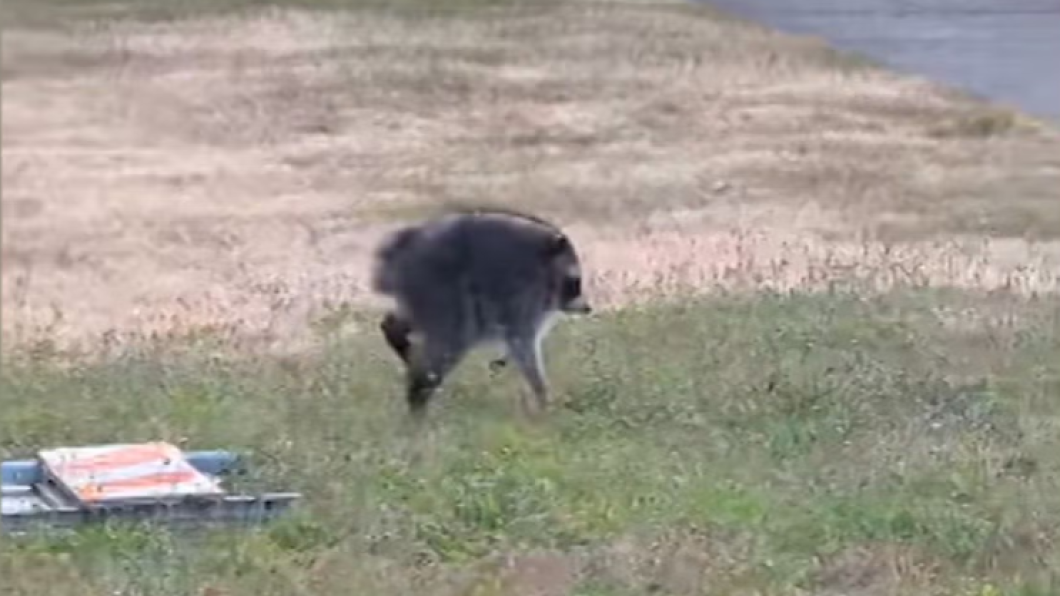
A disabled Seattle raccoon is winning hearts online
By Louise Kinross
Jimothy is a raccoon with a shortened spine that has become a media darling in Ballard, Seattle and around the world.
Even Britain's The Guardian newspaper has written about him, calling him "social media's newest cult hero" and noting his image is being emblazoned on stickers, t-shirts and tote bags. Jimothy is also making headlines in the Philippines and Australia.
Jimothy's short, round body, caused by a rare genetic condition, has been referred to as cute, silly, majestic, charming, resilient and "a bit freaky looking."
Seattle residents post sightings, including one who named him Jimothy, while artists draw him and tattooists are asked to ink him.
Alexis Mercedes Rinck, a member of the Seattle City Council, announced that she would present a proclamation to commemorate "Jimothy Summer."
"I think he's an example to all of us that you don't have to be perfect to be loved, and it's what makes us different that makes us sensational," she said in this New York Times piece. The article noted that an official NASA account on X posted a photo of Seattle taken from the International Space Station Monday, with the caption: "Jimothy runs this city."
The phenomenon is interesting because spinal conditions in newborn babies are not typically celebrated.
Abigail Roscoe, a disabled artist at Coyote Studio in Vancouver, B.C, wrote a thoughtful Instagram post called Disabled does not mean less loveable:
People can look at a disabled animal and immediately see everything that makes them special.
They notice the unusual way they move, or the features that make them different. They celebrate their resilience, adapt their environment, and speak with so much tenderness about how deserving they are of patience, care, and love.
But disabled people are rarely offered that same curiosity or compassion.
Our differences are treated as uncomfortable. Our needs are called inconvenient. Our bodies are stared at, dismissed, infantilized, or treated like cautionary tales. The qualities people find beautiful and inspiring in disabled animals suddenly become reasons to avoid, judge, or underestimate a human being.
Why is a disabled raccoon allowed to be charming, distinctive, and deeply loved, while a disabled person is expected to hide every visible sign of what they have survived?
There is nothing wrong with loving animals like Jimothy. That love is beautiful. But compassion should not stop where humanity begins.
Disabled does not mean less worthy of tenderness.
Disabled does not mean less interesting, less beautiful, or less deserving of attention.
Disabled does not mean less worthy of love.
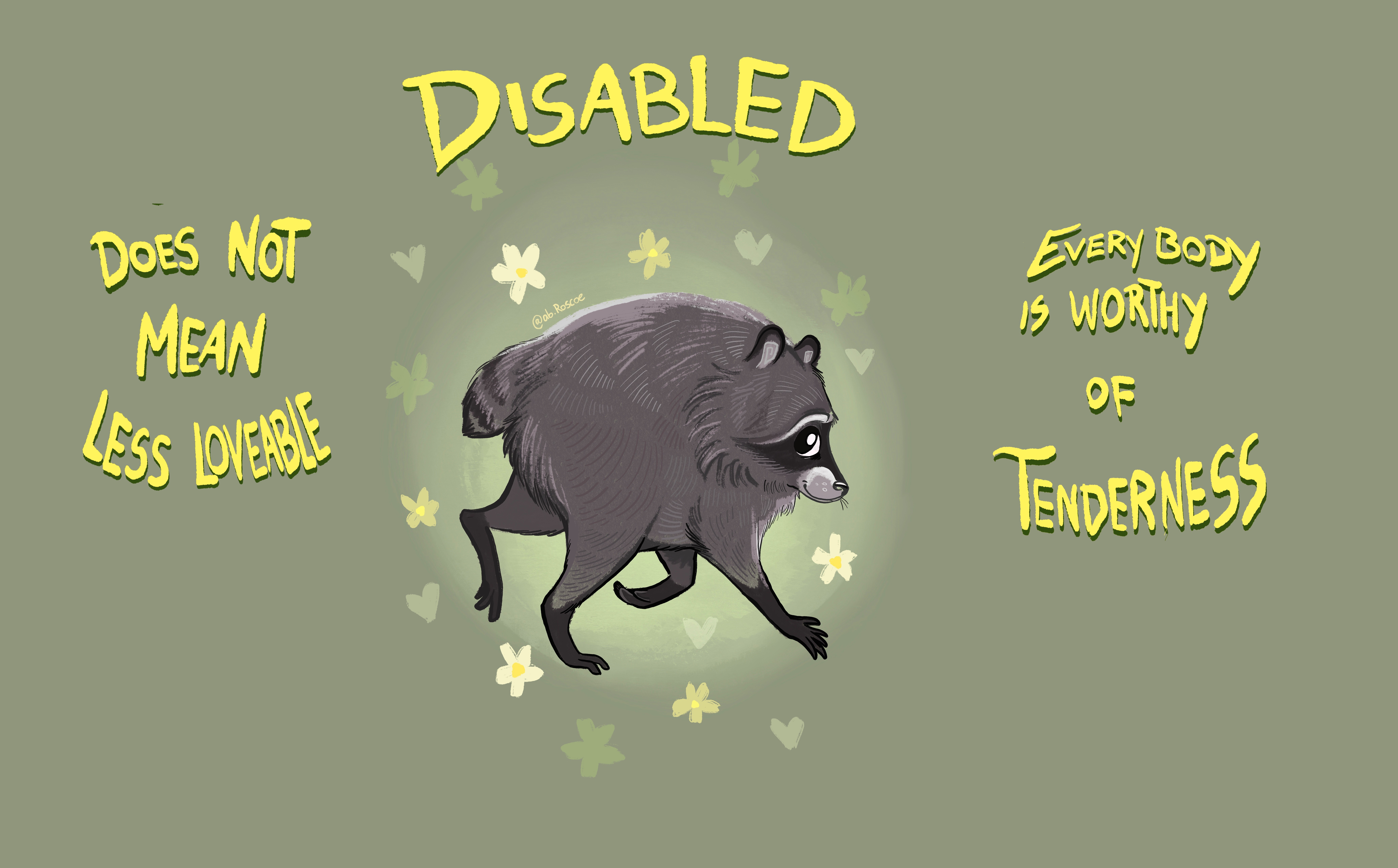
The illustration above was done by Abigail Roscoe of Coyote Studio in Vancouver. Like this content? Sign up for our monthly BLOOM e-letter or take our short BLOOM survey.