
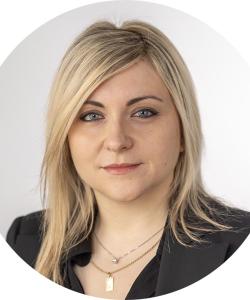
Silvia Orlandi
Research focus: Dr. Orlandi’s research focuses on developing and translating pediatric brain-computer interfaces (BCIs) and neurotechnologies for children and youth with neuromotor disabilities, including those with complex motor and cognitive needs. Her work spans both non-invasive and implantable BCI systems, with the goal of creating personalized neural interfaces that support motor function, communication, cognition, mobility, and meaningful interaction with the environment. She integrates neural and physiological signal processing, artificial intelligence, virtual reality, wearable sensing, and rehabilitation engineering to develop technologies that can move from laboratory research toward clinical and real-world use.
Link to PubMed: Silvia Orlandi – PubMed Profile
Link to Google Scholar: Silvia Orlandi – Google Scholar Profile
Education & Profession
Education:
- Postdoctoral Fellowship, Bloorview Research Institute, Holland Bloorview Kids Rehabilitation Hospital
- Postdoctoral Fellow, Department of Information Engineering, University of Florence
- Ph.D., Bioengineering, University of Bologna
- M.Sc., Biomedical Engineering, University of Florence
- B.Sc., Electronic Engineering, University of Florence
Professional Membership:
Brain-Computer Interface (BCI) Society; Institute of Electrical and Electronics Engineers (IEEE); IEEE Engineering in Medicine and Biology Society (EMBS).
Honours and Awards:
- Brain Canada–Kids Brain Health Network Postdoctoral Fellowship in Developmental Neuroscience Research (2018–2019);
- BRITE Award for Excellence in Research Collaborations, Bloorview Research Institute (2018);
- Dr. John Whittaker Memorial Award, Bloorview Research Institute (2017)
Contact Info
Bloorview Research Institute
Holland Bloorview Kids Rehabilitation Hospital
150 Kilgour Road
Toronto, Ontario M4G 1R8
Canada
Phone Number*: 416-425-6220 ext. 6062
Email address*: sorlandi@hollandbloorview.ca
Media Expertise
Pediatric brain-computer interfaces (BCIs), implantable and non-invasive neurotechnology, neuromotor disabilities, communication and speech disabilities, assistive neurotechnology, artificial intelligence in rehabilitation